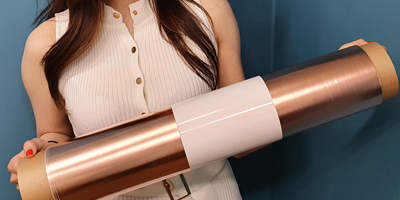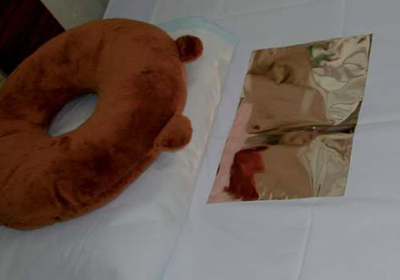
Fig. 1. Copper film attached to a bed sheet.
During the study copper film was attached in 3 locations.
------------------------------
Use of Copper Alloy for Preventing Transmission of
Methicillin-resistant Staphylococcus aureus
Contamination in the Dermatology Ward
Nanako Niiyama1, Takeshi Sasahara2, Hiroshi Mase3, Michiko Abe4, Haruo Saito5 and
Kensei Katsuoka1
Departments of 1Dermatology and 2Microbiology, Kitasato University School of Medicine,
Kanagawa, 3New Materials Development Center, Mitsui Chemicals Inc. (currently: Mitsui
Chemical Analysis & Consulting Service Inc.), Chiba, 4Faculty of Hygienic Technology, Kitasato
University School of Allied Health Sciences, Kanagawa, and 5Japan Copper Development
Association, Tokyo, Japan
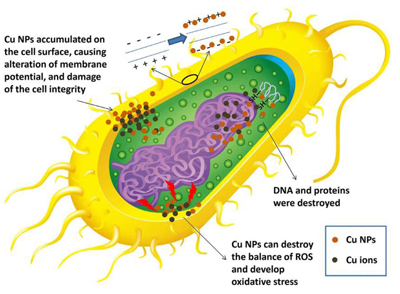
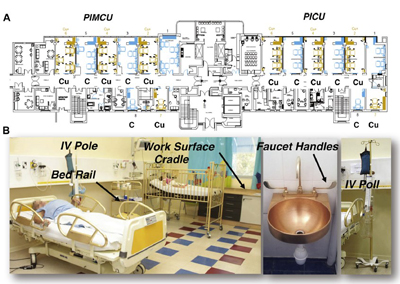
Metallic copper has been shown significantly to reduce methicillinresistant
Staphylococcus aureus (MRSA) contamination of the ambient surroundings of
the beds of MRSA-carrying patients in dermatology wards. The aim of this study was to
determine whether a bed sheet made of copper-coated film will reduce the spread of
MRSA contamination in the environment of a heavily-colonized patient. The bacterial
count was highest on the bed sheet. MRSA cell counts on the surface of the non-filmcoated
control sheet were high (6,600–11,000 colony forming units (cfu)), but those on the
copper film were considerably lower (20–130 cfu). Use of metallic copper on the bed
sheets of patients who are likely to be a source of MRSA contamination may help to
prevent the spread of MRSA contamination in hospital wards. Key words:
copper; Pseudomonas aeruginosa; Staphylococcus aureus.
For more information, please refer to the attached file.